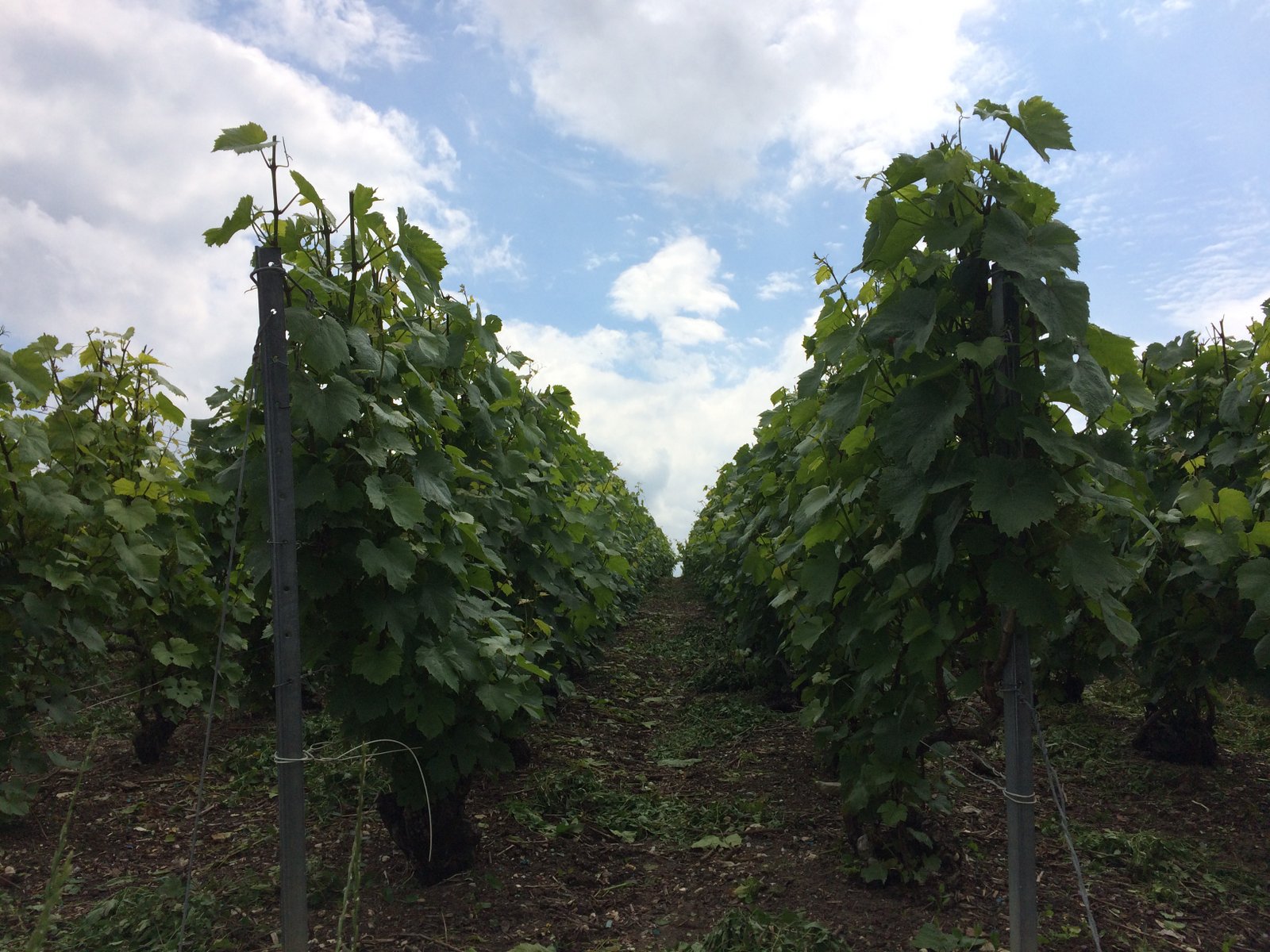
4. sep. 2019

This blog has moved...

... please the new website of Champagne Tange-Gérard here.


Thank you for your interest here. We hope you'd like to continue in our new spot.


22. jan. 2019

Let's make 2019 a happy year


2019 is a milestone for us, now our champagnes have been around for incredible 10 years. Some of you have been with us since the start, others joined through the years. Good champagne gets better with time. We think, it goes for relations as well. Thank you very much to all of you.a


Champagne is one of the most famous wines worldwide. It is also a very traditional region in Northern France, where winemakers understood how to keep wines deliciously relevant for hundreds of years by constantly reinventing it. This combination of tradition and creativity is also the key for our work.

We had several reasons to do it our way, many choices were linked with our tiny size. Instead of making up a traditional tale of long heritage and gilded luxury we decided to simply show and share what we do and how. And for the rest, we’ll continue to allow taste to do the talking. You’re always invited to join in Soulieres.


A rich heritage is what we deal with daily. Some vines were planted before we were even born by people long gone. During winter we prune the plants to enable them to stay healthy. To care, to deal, to remove what does not serve a purpose maintains the vigour and allows the rest to thrive in spring. It seems a good principle in general. We’d love to see it implemented in other parts of society as well.

However, we also felt that we should take traditional methods further and add new ones to grow the vines and the business in a sustainable way whilst not putting our company at risk. This is an interesting task and process that certainly follows a never-ending circle rather than a line with the target at the end.


Cuvée Solliage was introduced in Copenhagen in 2018. New champagne: new line, new design and 100% sustainable grapes from Tange-Gérard. We were pleased to welcome some of you at this occasion. This year the next “singles” champagne will join the line with the crispness of an extra brut. We all know, it takes two to tango, get ready at your glasses.

2018 was the year of all superlatives. Abundance of sunshine, warm temperatures, beautiful grapes, great wines. We had the pleasure to vinify the grapes of our oldest vineyard separately. Later in spring we will decide how to get the most of these very tasty still wines for a future “singles” treat.


For us, champagne is a way to sprinkle that special kind of magic dust that quality wine may add to the moments that are important for you. We like to call it “hygge à la champenoise. Let’s spread the message.

Cheers and all our best wishes for 2019 for you,
Alain & Solveig, Soulières, January 22th, 2019


9. sep. 2018

Harvest 2018 : Superbe, magnifique or put simple : just zen

5.000 kiloes of grapes.This is the weight, that has passed through the hands of each picker in average at our place. It gets close to double of an ordinary year. That is like any other year than 2018, where absolutely nothing has been neither normal nor ordinary in Champagne. The seven days of grape harvest at Champagne Tange-Gerard were Zen. Simply put.

A deep pleasure to collect perfect fruits
Please imagine the clusters. They may be Pinots of a deep blue colour, at places close to black, or green Chardonnays turning yellow with their dark and barely visible points on a skin that lets you catch just a glimpse of the tiny pips inside. The grapes are not big enough to touch each other leaving the clusters open instead of compact. And there are so many of them that none in Champagne saw anything like it ever. The result of perfect weather throughout the flowering in june and ever since.

These blue and green spheres are what this is about. They throng the branches of the vines, just perfect. No of rots, mildew or other scourges that we usually have to sort out. This year all clusters are in perfect health. One after another. We eat as many as we want to. The acidity does not bite as much as some years, but it still counterbalances the sweetness of grapes, that grew up in paradise all summer.

Not everyone would choose the word Zen to describe the repetitive task when you cut five ton of absolutely gorgeous grapes in seven days. But those of us who did this before know from within that what we experience this week is on another level than ever before.

Future champagnes from a superb year
The best way to make good champagne is to have ditto grapes for a start. The sacrosanct ba-lance between sugar and acidity counts, yes sir indeed, but the best possible start of something big is still to have absolutely healthy grapes in your press.

To say that we do not have expectations to the vintage of such an exceptional year as 2018 would be a downright lie. We had the last taste of the must right off the presses on the last day of the harvest at our place, August 31rd. Now is the period where the must fermentates to wine, next year, we will fermentate it once again in the bottle and after a couple of years or four more in the caves, it will have transformed into champagne. Only then will come the time of looking for words to qualify the quite extraordinary grapes of 2018.

The next single is ont its way
This autumn we plan to present our next single : a blanc de blancs champagne from 2014. A year that began early and warm to change into rain and cold to finally end happily with sun and sugar and it is all there in the bottle, certified sustainable as is cuvée Solliage from 2013.
We have sold Solliage since February this year. It has received many fine words and sold well, which confirms us in our big investment, economically and timewise, to create a new range of champagnes. Of course we continue to sell our old brut friends like Tradition and Noirs & Blancs, both non vintage, the vintage champagnes Blanc de Blancs (2012/13) and Selection (2007) and the rosé champagnes Rosé d’Assemblage og Rosé de Saignée,

Regards from Zenpagne,
Alain Gérard and Solveig Tange, Soulieres, September 2018


Please send a mail if you want to know more. Enjoy, Alain Gérard and Solveig Tange.

24. aug. 2018

Champagne Tange-Gerard : Grapeharvest from Aug 25th

These Pinots were sampled one week ago.

Saturday 25th of August, it's for real.

At Champagne Tange-Gerard, we will begin with the black Pinot Noir and Pinot Meunier to continue with the white Chardonnays in a few days.


Good quality of grapes
The quality of the year is very promising.

Lots of sugar due to the wonderful weather all summer and zero rots thus perfectly healthy grapes.

This is excactly what you need to make great champagne. So that will be very interesting to follow even it is not for us to guess about right now.

We receive people for dinner tonight and tomorrow we are ready for take-off.


A single from 2018
Obviously, we plan to make another future member of our "singles" line, introduced earlier this year, and where the main shared feature is singularity.

As the quality of 2018 seems so interesting and promising.

We expect the first of our singles, Cuvée Solliage (Read more here), to be followed by the next one later this year. It is a brut nature made of 100% Chardonnays.

Please fine more information about the general ideas of the singles line here and about the classic line here.


Franco-Danish sustainability
As we have come from different worlds - France and Denmark - our daily work is to bring these origins and views together in our Tange-Gérard champagnes and in our daily work where we have made sustainability a key word of the management of our company.

In the summer of 2016, we proudly received our viticulture durable certification. This summer we passed the "mid term"-check. This is a demanding choice for a small company like ours that is not equipped with state-of-the-art machinery to support the change of the way we work in the vineyards. Our main tools are more than 40 years old, and that includes ourselves :-)

As for the bubbles, we enjoy them as much as ever, and our shared hope is to let them make your world spin in an easy-going fashion too. Champagne makes the world more fun, even just for a while, why not go for it ?


Please send a mail if you want to know more. Enjoy, Alain Gérard and Solveig Tange.

3. feb. 2018

Welcome to the first TG single : Cuvée Solliage

Today is the day we have waited for very long at Champagne Tange-Gerard.

When you read this, we have just presented our new champagne which is the first member of a new and second range. The singles line will join what from now on will be known as the classic line.

Now, say hi, meet the world, Cuvée Solliage :-) World, please welcome our little bubbly one.


The classic and singles lines
So what is different then ? The singles line... that's were you will find this latest member of the family and the first one where the main shared feature is singularity.

Read more about the new champagne here (with fact sheet) and find information about the general ideas of the singles line here.

The classic line... that's all the different champagnes you have met this far. Find them all here, and read about the general ideas of the classic line here.


The place, today and tomorrow
Based in Champagne, we have many customers turned friends and friends turned customers in Copenhagen, which is why we have chosen this city to present our first single cuvée for people who has been helpful throughout our nine years of existence.

We'd like to extend our range of action beyond Denmark and France. If you are interested, please don't hesitate to drop a mail to arrange how to possibly meet at your place or at ours for a taste and a discovery at our premises.


Franco-Danish sustainability
As we have come from different worlds - France and Denmark - our daily work is to bring these origins and views together in our Tange-Gérard champagnes and in our daily work where we have made sustainability a key word of the management of our company.

In the summer of 2016, we proudly received our viticulture durable certification. Now we are up for new evaluations to continue along this path. This is a demanding choice for a small company like ours that is not equipped with state-of-the-art machinery to support the change of the way we work in the vineyards. Our main tools are more than 40 years old, and that includse ourselves :-)

As for the bubbles, we enjoy them as much as ever, and our shared hope is to let them make your world spin in an easy-going fashion too. Champagne makes the world more fun, even just for a while, why not go for it ?


Please send a mail if you want to know more. Enjoy, Alain Gérard and Solveig Tange.

26. sep. 2017

Champagne 2017: Easy season, harder harvest

Our grapes have been placed and carried in buckets and boxes to the presses to proceed the pressing by the first fermentation. They currently are in a state of very young wine.

The Champagne-harvest of 2017 is through, and let’s just say that our expectations are as big as we dare.

Even we have picked the grapes, sorted them out and when tasting them appreciated their interesting balance between high acidity and a strong sweetness, we still cannot know them very well as wine. Neither young, nor older and since every change has many possible directions, we'll have to wait to know what flavours and tastes time will bring us.


Early, dry, warm then cooler season with rain

In 2017, the growth of the vines began already in early April, and we were lucky to avoid damages when it froze a few weeks later. Very warm days, very little rain were the standard most days until mid July where the temperatures finally dropped and days got cooler.

We were quite happy to see the super speed of growth slow considerably down. Even a bit of rain made the grapes gain some weight. Later more rain followed with a timing we liked a lot less since lots of rain closely before the grapeharvest is a likely source of possible disease.

The start of the grapeharvest was agreed as late as a week before we began on September 2nd.

For us, it was too late to save it all as a surprisingly fast deterioration left us with many rots between our Pinot Meunier-grapes. Consequently, we had to leave grapes on the ground instead of in the bucket.

We count ourselves lucky because our Chardonnay-grapes came out a lot better. These are the grapes, we are currently working into one of our Tange-Gerard plot champagnes. Grapes that came very close to a perfect degree of sugar, and a must that contained a delicious creaminess that we are looking much forward to check and taste again when the young wine will be stable in a few months.

An early Tange-Gerard
This 2017 vintage will be the first Tange-Gerard champagne from an early year.

It is also the first time that we have measures of our grapes being challenged by the plants that grow naturally between the rows since we do not remove them constantly.

When the vines have to compete with wild plants about access to minerals and water, this may show for instance in the natural level of nitrogen in the berries. As nitrogen is needed in the early stage of the fermentation, we had to add some to help the work of the yeast.

So exciting to trace our sustainable methods directly at this crucial moment. Double exciting it shall be to taste the result in some years.

Introducing two lines: Singles and Classic
This far, we concentrate on our vintage from 2013. This was the first grapeharvest where we managed to make our first champagne with 100 % our own plots' grapes.

We remember the year as unusually late. The grapeharvest continued in October which nowadays is very rare in Champagne. October 3rd, we pressed the grapes of this 2013-vintage, that will be the first of our new ”Singles” line of champagnes with a very limited amount of bottles and the symbol of sustainable viticulture on its label. Stay tuned for more news later this autumn.

Our assortment this far continues with the ”Classic” line including the assembled champagnes of Tradition and Noirs & Blancs, the vintages The Blanc de Blancs (vintage 2011/12) and Selection (vintage 2007) and rosé champagnes Rosé d'Assemblage and Rosé de Saignée .


Automnal regards,
Alain Gérard and Solveig Tange, Soulieres, September 2017

22. jul. 2017

Welcome to our vineyards: Early start of 2017 means early grapeharvest

2017 has confirmed itself as another early year in Champagne.

Since the leaves came out in early April, very warm temperatures followed most of the time and have made the growth of the vines unstoppable.

As the grapes have closed, the growth of the vines declines and the maturing of the grapes begins. This is the final state before the grapeharvest and it is the period where the grapes change colour from very green and to transparent yellowish for the Chardonnays and dark blue to almost black for the Pinots.

No major problems
So far we have been lucky.

No frost, no storms and hail, no disease as it hardly rains at all in 2017.

In fact, we have had so little rain, that we would like a bit more of it.

The vines are quite fine. Normally, the underground chalky layer of Champagne contains the water needed. On top of that, the ploughing of the soils helps to absorb the few raindrops we have received and keep them in the ground, near the plants, rather than running off. This moisture is clearly visible each time we work manually to remove the weeds, each time it is surprising with temperatures above 30 degrees Celsius day after day.

But we still need a bit of rain for the grapes to gain some weight. As for the health of the grapes, it is excellent. No less, no more.

Assortment of Champagnes
We suggest a number of different champagnes.

Some of us think that Rosé champagnes are summer style, others drink them all year round. Whatever your preference may be, we suggest our Rosé de Saignée which is a 100% Pinot Noir champagne based on maceration with a taste as powerful as this red grape allows with all the black fruits, you could ever want. It will fit anything from your aperitif to your main course and even a dessert like fruit salad. Our second Rosé d'Assemblage is an assembled champagne, based on Chardonnay grapes.

We suggest our non vintage champagne of some age - Tradition - based on mainly Chardonnays. It exists in a Demisec version as well. Our two current 100% Chardonnay vintages are both from early years: The Blanc de Blancs from 2011 and the Selection from 2007. Finally, the Noirs & Blancs is a non vintage champagne of age, based on 70 % Pinot Meunier and Pinot Noir and 30% Chardonnay.

Franco-Danish sustainability
As we have come from different worlds - France and Denmark - our daily work is to bring these origins and views together in our Tange-Gérard champagnes and in our daily work where we have made sustainability a key word of the management of our company. Last summer we were quite proud to receive our "viticulture durable" certification and we continue along this path. The bubbles, we enjoy them as much as ever, and our shared hope is to let them make your world spin in an easy-going, funny fashion too. Even just for a while.

Please mail us if you want to know more. Enjoy, Alain Gérard and Solveig Tange.

23. maj 2017

Welcome to our vineyards : 2017 this far is Fast Forward

This far 2017 looks like another early year in Champagne.

The first leaves were out around April 10th. Growth has been on ever since. At the moment we watch the buds unfold to reveal their complex inner construction that will develop into leaves, grapes and tendrils.

Luckily for us, only a few buds seem to have been hit by the spring frost of late April that has devastated vineyards all over Europe. In Champagne, the damage is evaluated to a loss of around 20-25 %, obviously with big individual differences. We were more worried about insects eating buds which seemed to happen disturbingly fast. Now their damages are visible, it is one of many nuisances of all sorts to cost us potential grapes.

Dry and warm
Since April, the weather has been very dry and quite warm. We have removed the grass between the vines in most fields to avoid too much competition for water between the vines and the grass.

The warm weather with temperatures well above 20 degrees Celsius most days for some weeks has made it necessary to begin lifting the wires around Ascension Day. It could be another early year, we have begun our comparison with mathcing jobs and dates in 2007 and 2011, both had grapeharvests in late August.

Assortment of Champagnes
The pink of buds and their interior at this crucial moment you will retrieve on the label of our Rosé de Saignée. It is a 100% Pinot Noir champagne, the taste is as powerful as this red grape allows with all the black fruits, you could ever want. It will fit anything from your aperitif to your main course and even a dessert like fruit salad.

We suggest our non vintage champagne of some age - Tradition - based on mainly Chardonnays. You will find it in Rosé and Demisec versions as well. Our two current 100% Chardonnay vintages are both from early years: The Blanc de Blancs from 2011 and the Selection from 2007.

Finally, the Noirs & Blancs is a non vintage champagne of some age, based on 70 % Pinot Meunier and Pinot Noir and 30% Chardonnay.

Franco-Danish sustainability
As we have come from different worlds - France and Denmark - our daily work is to bring these origins and views together in our Tange-Gérard champagnes and in our daily work where we have made sustainability a key word of the management of our company. Last summer we were quite proud to receive our "viticulture durable" certification and we continue along this path. The bubbles, we enjoy them as much as ever, and our shared hope is to let them make your world spin in an easy-going, funny fashion too. Even just for a while.

Please mail us if you want to know more. Enjoy, Alain Gérard and Solveig Tange.

27. jan. 2017

Ok, it's been a while with 2017 already...

... but we still like to say Happy New Year to all of you.

One year has gone by since we told you about our plans to become certified as sustainable winegrowers. This is why we are quite proud to announce that we are now number 84 in Champagne who may use the logo at the right:: The symbol of sustainable winegrowing in our area. This is the first time we use it.

So what's in it for you?

The range you know plus a new one
Well, already this year we expect to see the range of good champagnes, that you already know, followed by a new serie of cuvées, made of our own grapes exclusively. The first of these champagnes is from 2013, and it represents the start of our conversion from conventional to sustainable winegrowing as it is the first season where we pruned all vines ourselves to get less and better grapes. More about the new Tange-Gerard champagne will follow later this year.

A first step with sustainability
You may want to know a bit more about sustainability. We have always experimented with methods and materials, and since 2012 we have gradually changed the direction towards ecology. In 2016 we applied for and later qualified to be certified sustainable winegrowers after providing documentation for our practices and choices made and an almost full day examination.

As we see it, sustainability is part of a process that will lead us to full ecological production (read more in the new sustainability section). This far, we have gradually stopped using chemi-cals in many areas and will continue to do so as our economy and organization allow. Every year we introduce practices to reduce our impact and print on our environment.


The importance of people meeting
The other important element of our company is the people. We have become increasingly aware about the value of different horizons. Not the least in a modern society that seems to become more stratified and individualistic as years go by. At our place, we don't meet the others, but each other. Foreign and French, young and old, unemployed and students, countryside and town. This makes us proud and its not even our invention:

"That's the only way I know how to receive people," says Annie, who is currently in charge of the cooking and the greeting at harvesttime. We believe that you cannot overestimate the importance of such a warm welcome combined with French countryside cooking and of course a quick one.

All our best wishes for you in the new year.

Cheers, Alain Gérard and Solveig Tange, January 27th 2017

18. nov. 2016

Champagne: Our range


At Champagne Tange-Gerard we suggest the following range of champagnes:

Singles line..........Meet our single line champagnes

  • Classic line..........Meet our classic line champagnes
    Disgorgement dates


    Main page
  • 14. okt. 2016

    Champagne 2016: Challenged by rain

    In Champagne, 2016 has been marked by rain. Not least the grape harvest in late September. So what to expect from the grapes of such a year as we'll meet their tickling bubbles against our palates? We dropped the last grape in our black buckets only a few weeks ago but the final result remains difficult to predict. But as the season has been unusual ever since April, it is hard to imagine that the final bottled champagne should not be something special as well.

    Now, it is not exactly hot news that growing grapes in Champagne can be a tricky affair. It has been so for centuries. Still, in 2016 it did seem more miraculous than ever to watch the balance between success and failure tilt to the positive side. In Soulières, residents must be closer to 100 years than 50 to have experienced a season with such a narrow margin. Mainly due to rain: Seemingly endless rain throughout spring gave us problems all summer. Then a few millimetres of rain shortly before the harvest made the grapes put on weight badly needed.

    This allowed us to land 35 tonnes of pretty and healthy Chardonnays and Pinots. We began in the morning of September 21st and finished just before lunch seven days later. With a lot less grapes than usual but enough for the 8.000 bottles of Tange-Gérard champagne, we sell every year, and on top of that grapes for our coop. By now, most of it will have finished its first fermentation. Once stability is reached, next year, this very young wine will go through a second alcoholic fermentation in bottles to be blessed with bubbles by sugar and yeast.


    Complicated season
    In the vineyards this year, frost followed right after the first leaves were out. Maybe that's what disturbed the growth for the rest of the season. Or maybe the long draught of 2015 disturbed the production of grapes this year. Anyway, the big variation between the development of the plants was one factor that made 2016 such a challenge all the way.

    Throughout the spring, the constantly pouring-down rain delayed the development of the vines further, it disturbed the flowering and made the fight against mildew rather constant throughout the spring to the end of July. Only in August the weather finally changed with temperatures far beyond 30 degrees Celsius. The heat saved a good deal of our grapes from the disease, but they were still small and few that we hired one third less people than usual to pick them. Five millimetres of rain few days before the start added substantially to the weight of the grapes - miraculously - now we wait to know more about their taste.


    The must and the wine
    We have tasted the must directly from the press. Especially Pinot Meunier is rich as our black grapes got very mature. Their future is mainly red as the colourful element of our otherwise Chardonnay-based rosé champagne. The Chardonnays were picked last, which helped to supply them with more sugar and less acidity in a fine balance between these decisive poles. It is still to early to say in which way the rain of 2016 will finally express itself in the wine. But stay tuned. The continuation will follow in a bottle hopefully near you in some years.


    Current champagnes
    Until then we suggest non vintage of some age (Tradition and Noirs & Blancs), vintage Blanc de Blancs (2006 and 2010), two rosé types (Chardonnay-based Rosé d'Assemblage and Pinot Noir-based Rosé de Saignée) and finally a sweeter Demisec. In 2017, we expect to present the first bottle in a coming-up series of new Tange-Gerard champagnes for you.

    Harvestgreetings from Alain Gérard og Solveig Tange, Soulières, october 2016

    Be sure to enjoy
    :-)

    11. okt. 2016

    Champagne: The Tange-Gerard singles line

    Our singles line of champagnes reflects our terroir, our way of working, inventiveness and creativity.

    The basic idea is singularity. It may be a single cépage, a single plot, only "vieilles vignes" or something else. Always a single year.

    Our aim is to draw any possible benefit from our tiny and very human size of domain which enables us to oversee a maximum of details ourselves.

    The singles series come in very limited numbers. Maybe only once. Therefore, all bottles are manually numbered.

    The terroir
    Our terroir is particular at the corner of the Côte des Blancs south of Épernay.

    Here the chalky soils of Champagne (may) mix with layers of either clay or silt combined with organic material giving the vines harder times to develop and lowering yields naturally.

    Furthermore, the altitude of our plots at some 200 meters above sea level allows our soils a different expression than the lower part of Côte des Blancs.

    The plots whether in Soulieres or in Loisy-en-Brie are all orientated east-west to benefit as much as possible from the sun.

    The outdoor sustainability
    We have decided to apply our conviction in all aspects of our work. Thus we grow our vines in agreement with the rules of Sustainable Viticulture in Champagne. These contain a coherent set of environmentally respectful practises.

    Currently, we use a maximum of organic agricultural inputs (for instance fertilizers and occasionally minerals). However, we still reserve ourselves the possibility to use non natural fungicides when necessary to secure a minimum yield.

    Furthermore, we work the soils mechanically and manually with the use of small tools, that tend to impact the environment less than bigger ones.

    We don't use any kind of insecticide whatever in the season because we want to favour the presence and multiplication of a fauna symbiotic with our work as well as seeing a development or preservation of natural habitat zones.

    The grapes
    We grow the grapes for the singles series in our plots in Soulieres and in Loisy-en-Brie. The vines are rather old as these plots were planted between the early sixties and into the eighties.

    Of course, such old vines produce less grapes. However, smaller yields award us with grapes of more concentrated aromas that we want to work into correspondingly expressive wines.

    You will find both Chardonnays and Pinots in our soils though with a slight majority of the white grapes that have made the region famous and popular amongst wine lovers.

    The harvest
    In the days before the grape harvest we measure the sugar of the different varieties in each plot carefully. Our aim is to pick grapes that will provide a level of alcohol around 10,5 %/vol.

    Two samples combined with berry tasting enable us to decide for the start as well as the order of plots which will vary with the years. The decision must balance the possibility of better grapes with the risk of decline.

    The grapes are hand picked and pressedimmediately in Coquard horizontal presses at our cooperative in Vertus, less than 10 kilometers from the vineyards.

    The pressing is followed by a passage of up to 12 hours in small steel vats to allow solid stuff in the fresh must to sediment.

    The vinification
    The vinification takes place in 60 hl steel vats.

    Industrial yeast is added for the fermentation to ensure a smooth process. Healthy grapes are crucial.

    The first alcoholic fermentation is usually achieved in 10 to 14 days. The young wine remains unstable during the following months. It makes sense to taste it the following spring only.

    As we like our wines to age more than average, we avoid the malolactic fermentation. The sharp acidity of the young wine will diminish naturally with time thus preserving a more youthful taste than what would be the case with malo done.

    The champagnification
    The singles line champagnes are not blended with reserve wines from other years. Instead these champagnes represent their year of origin as well as their plot.

    The second alcoholic fermentation is performed with the same yeast mixed in some of the same wine and local sugar. The same sugar and wine will be used for the dosage later.

    The bottles spend at least three years on the lees in the cave, possibly some more time before and after the disgorging, thus they have some years of age already before leaving our premises.

    As the wine develops with time, the dosage must adapt to achieve what we believe to be the best taste. Therefore, different lots may be dosed differently. You will find the dosage as well as the time of the disgorging manually written on the back label.

    The packaging sustainability
    The labelling and packaging of the singles champagnes are in line with sustainability as a global approach.

    But since champagne is also a wine of celebration, we like it to look accordingly.

    The star of our village combined with a color on natural fiber-based paper and water-based ink assures continuation with the look of our classic line.

    Despite a rich tradition to present prestige champagnes with cutting edge packaging, we have decided to remain modest to keep our usage of materials low.

    Instead we care to number each bottle manually on the back label to state that the singles champagnes are rare wines, that are conceived in very limited quantities.

    The fun
    A glass of champagne instantly transforms the moment into something nicer.

    Our singles range is destined for occasions where you want the champagne to be a leading part for a moment spent with people you want to share the experience of this wine with.

    Take your time, taste the wine. Try again and allow yourself and your senses to follow the taste as it develops in your glass. The best way we know to allow a champagne to live and to live on is to experience it and share this with people we appreciate.

    This range of champagnes can be enjoyed on their own or with treats that allow the wine to stay the leading part.


    Champagne main page

    10. okt. 2016

    Champagne : the singles - Solliage

    Our cuvée Solliage is the first member of the singles range.

    As all first timers the work, the pride but also the anxiety follow along the steps of it leaving home to settle well somewhere out there in a cave with you.

    Solliage is pure 2013. This year was a late starter.

    The year in our vineyard
    Spring arrived late in Champagne in 2013. The winter never seemed to finish. In April our vines were three weeks behind their usual stage this time of the year. Later, the flowering in early July took place under the same hideously cold conditions. This caused phenomena like millerandage and coulure that would leave us with fewer and smaller Chardonnays than usual.

    Then a sudden change brought warm temperatures for the next two months with more sun than ever measured in 20 years and no rain. Thus, the pollination ended much better than it started. A bit of rain in September enabled the grapes to put on some weight very much needed. But the vines never caught up with the time lost in spring: Late buds, late flowers would inevitably mean late harvest.

    A grape harvest in October was last seen in the 1980s, and the family memories of such late grapes were not the best. Despire samples of excellent quality, we remained slightly sceptical until the 2nd of October, where we picked the first Chardonnays that we planned to elaborate into our own cuvée.

    These grapes were simply shiny: Yellowish due to their high level of maturity and in perfect health. The fears we had to find them in a state of deterioration because of possibly wetter weather in October turned out to be of no relevance : Like anything else this unusual year, the traditional moist of the month seemed delayed as well, likely saving the grapes from the fate of fungi.

    However, the logistical challenge to pick enough grapes to fill one press within our target time became possible also because of our dedicated team who made our target theirs.

    The vendange and the vinification
    8.000 kilos were pressed with stems and skin as is the tradition in Champagne. The result was a rich and quite heavy must with a sugar level of 10,85 %/vol., which corresponds to grapes being as close to ripe as we could possibly want.

    The Chardonnays of the cuvée originate from three different plots: A bit from the plots of Crochettes and Belles Feuilles in Soulières and more from the low part of the Chardonnays field called Vieilles Grand-mères in Loisy-en-Brie.

    A first impression of the young wine showed a certain fattiness (richness) caused by the ripeness of the grapes. Furthermore, an impressive amount of acidity with green fruits, lemon and more exotic tamarind confirmed our general impression of 2013 as a year of exotic fruits on the nose and palate in general. It was decided not to perform the malolactic fermentation (malo) to leave the wine as close to its primary properties as possible.

    As the young wine obtained a more stable state in spring 2014, it confirmed itself to be a straight forward wine that kicks off nicely with a strong attack, a pleasant and steady abundance that finishes off long, fresh and mineral. As we decided to stick with the natural development of the wine, consequently no reserve wines were added leaving this wine as pure 2013.

    The taste of Solliage
    Four years after bottling, the cuvée Solliage still contains a high level of acidity that we interpret as an expression of the year: Very cold, then very warm, then cooler and eventually perfect dry and cool conditions for the harvest. A year that took its time, a champagne that seems to follow the same trend.

    The mousse is very alive with many small and fine bubbles that are somewhat different to our other champagnes. 2013 was our first year dealing fully with all the vineyards, and we decided to have grass growing between the rows. The vines were forced to share water and minerals which showed in the must with less nitrogen and consequently a different pattern for the fermentations.

    On the nose, the cuvée Solliage is expressive. As for the taste, the fun is only at the starting block. Still very fresh, this champagne is dry with plenty of green fruit flavours and notes of sweetness as a clear reference to the ripe must it came from.

    In the mouth, first, the lemony acidity seems omnipresent, but then you may discover deeper layers with pears and hazelnuts and sweetness like what we call viennoiserie. The richness of the grapes of origin has now become fat, abundance in your glass. The long finish hits notes of lemon with minerality and again some sweetness.

    In the years to come, we expect the acidity to diminish to let other tasty experiences take over. Under the correct conditions you can keep this wine for several years.

    Please don't hesitate to stay in touch and ask about the development of the champagne.


    Champagne main page

    21. sep. 2016

    Grapeharvest 2016 is on

    The grapeharvest is finally on at Champagne Tange-Gerard since the 21st of September. We expect it to last for approximately one week.

    We began the picking in the Pinots of Loisy-en-Brie, and plan to pick the Chardonnays in the end. The quality of the grape so far seems fine. It was a nice surprise to experience that also quantity-wise we seemed to put more kilos in the basket than expected. The bit of rain we received lately may have contributed to let the grapes grow a bit.

    Even the yields may not be quite as low as we have estimated, we will only know the final result in probably six days. And we don't expect to see usual quantities. The growth of the vines has been unusually troubled this year with frost in April followed by lots of rain and disease. This very unusual year will stay in our memories for a while despite the enourmous relief to be able to note that what we see and touch is good. As simple as that.

    Thus with a smaller team than usual, we look forward to examine more closely what we will land in our buckets. Those grapes are the end of the growth of 2016, and they are also the beginning of the champagne 2016 of which we expect something different. Just like the year itself.

    But that will be for later. At the moment we suggest non vintage champagnes of some age (Tradition and Noirs & Blancs) and vintage Blanc de Blancs champagnes from 2006 and 2010. We suggest two rosé champagnes (Rosé de Saignée and Rosé d'Assemblage) as well as a sweeter Demisec champagne.

    Everything is nice and tasty but don't take our word for it: Our doors are open whenever we are present so why don't you pay us a visit and try for yourselves? Please send a mail if you want to know more. Be sure to enjoy, Alain Gérard and Solveig Tange.


    16. sep. 2016

    Getting there: Grapeharvest 2016

    Enjoy: Time is almost up in Champagne, and you may expect something good. At Champagne Tange-Gerard we will pick the first grapes of 2016 on September 21st.

    At the moment, the grapes are reaching the maturity needed: Sugars go up and acidity the other way, though not too fast. On top of that the grapes are extraordinarily healthy due to the abundance of sun since late August.

    Though our yields will not be the same quantities as usualsince their growth has been unusually troubled this year with frost in April followed by lots of rain and disease. This very unusual year will stay in our memories for a while despite the enourmous relief to be able to note that what we see and touch is good. As simple as that.

    Thus with a smaller team than usual, we look forward to examine more closely what we will land in our buckets.

    Such will be the end of the growth of 2016, and the beginning of the champagne 2016 of which we expect something different. Just like the year itself.

    But that will be for later. At the moment we suggest non vintage champagnes of some age (Tradition and Noirs & Blancs) and vintage Blanc de Blancs champagnes from 2006 and 2010. We suggest two rosé champagnes (Rosé de Saignée and Rosé d'Assemblage) as well as a sweeter Demisec champagne.

    Everything is nice and tasty but don't take our word for it: Our doors are open whenever we are present so why don't you pay us a visit and try for yourselves? Please send a mail if you want to know more. Be sure to enjoy, Alain Gérard and Solveig Tange.


    22. jul. 2016

    Sustainability

    In July 2016 Champagne Tange-Gerard obtained the status of sustainable winegrower.

    This has implications for the way we work in the company.

    In the vineyards, sustainability covers these areas:

    You and the vineyards: Thumbs up for this attitude


    Many good people has come to work with us. They ask smart questions that make us all learn more. Please click this FAQ to know more as well.


    Sustainability sitemap: Overview of all sustainability pages

    Home


    21. jul. 2016

    Sustainability : The spreading of fertilizers

    We spread the organic fertilizers in late winter.

    Organic fertilizers work much slower in the soil than conventional ones. They deteriorate much slower which means that the elements will be available to the plant maybe only several months after spraying. The idea is to keep the levels in the soil and make sure nutriments are available in the period of growth

    Frozen rather than muddy
    For us, it is practical to spread the fertilizers in the winter because the ground is likely to be dry and hard.

    As we plough the vineyards, the rows may otherwise be quite muddy.

    Our little machine moves forward due to its caterpillar tracks so they will move anyway. But it is physically harder to manoeuvre it.

    Nourish the soil
    The idea of fertilizers is not to nourish the plant directly.

    Instead we supply elements and minerals that will nourish the soil based on our soil analysis.

    When the soil is healthy and sufficiently rich, it constitutes the best possible environment for the vines to remain strong and vigorous as they grow.

    Several decades ago pulverized city garbage (known as gadoues, composts urbains) was spread in vineyards all over Champagne because it was thought to nourish the environment. This has left a heritage of tiny plastic pieces in the rows. Obviously, this practice has been banned years ago, but as plastic decomposits slowly, the traces stay.

    Grind and spread
    We use a machine, specially conceived for the vineyards, to spread the fertilizers.

    For the purpose of this job, we equip the machine (le chenillard) with a spinning sprayer. The funnel is filled with the fertilizers, and as we move the machine forward, the pellets are sprayed over 4 rows.

    A maximum average of 50 kilos per hectare of nitrogen is allowed within the regulations of sustainable winegrowing. However, we tend to put less.

    Return Sustainability main page or
    How to nourish the soils


    Sustainability : Frequently Asked Questions (FAQ)


    Q: You are sustainable, but why are you not fully organic?
    A: We'd like to. Basically it is because one task that makes it currently impossible to be 100% organic, which is our sprays of fungicides. We are not equipped to do it ourselves and the company that works for us does not have an organic option. Once they do, we will probably go for it.


    Return Sustainability main page


    Sustainability : How to work in the growth period


    A healthy vine is a very vigorous plant.

    However, if it grows too many stems with too many leaves, it may damage the quality of the grapes.

    Therefore we aim at controlling the vine and keep its growth at a strict minimum.

    The removal of buds (ébourgeonnage)
    Only buds that grow on branches from last year will grow grapes. These one year old branches are the young wood left at the pruning.

    However buds may grow all over the plant: At the foot and on older branches and they will either not provide fruit or only very few and very small grapes. But they will grow into stems as big as the fertile ones. Thus the plant spends energy for nothing, which is why we remove these buds manually.

    The buds are very pink just before they burst, thus they are easy to spot.

    They are very soft and easy to remove with your hands.

    Around this time we unhook the middle wire of the trellis to put it on the ground. This allows the buds to grow freely. In some vineyards we have a double wire at the foot of the plant to manage low stems, this wire is unhooked and put on the ground as well.


    Return Sustainability main page or How to work the vines


    The removal of stems (épamprage)
    The Chardonnays come into leaf a few days before the Pinots. Still we may only arrive in some vineyards after some days of growth.

    Thus some buds may have time to develop into small stems, before we come to remove them.

    However, the proces is the same as for the buds, and the young stems are still very soft and easy to pull off.

    Buds continue to develop and we continue to remove whatever grows on old wood.

    It is still very easy to separate old wood from one-year-old wood. Once the stems are longes and the leaves bigger, it will take more time to check.


    Return Sustainability main page or How to work the vines


    1st lift of wires (relevage)
    The trellis carries three wires in different heights.

    The middle wire is also double, and it is used to control the stems.

    As the young stems reach a sufficient length, this middle wire will be lifted and placed in the lower hook on each of the posts.

    The operation will lift up a number of stems to place them between the double wire with their tip pointing upwards.

    However many stems will not have grown sufficiently to stay between the wires, and they will be put back manually later.

    At you move up the row of vines, you will place one wooden agraffe before each post. This helps to keep the double wires together and a miximum of stems to remain in between.

    You may still find new buds growing on old wood. Please remove them, they will develop into stems with no grapes and eventually the amount of leaves will be too overvældende for the plant to feed. On top of that, a too dense hedge may allow fungus to install themselves which is one of the major causes of disease.

    Why not as you are passing though have a look at your feet to meet the weeds?


    Return Sustainability main page or How to work the vines


    2nd lift of wires (relevage)
    The growth of the plants at this time is very vigorous. Sometimes the stems have grown visibly longer from day to day.

    A few weeks later, the double wire will be lifted to the second hook or similar heigth if the hook is missing.

    Stems that were not caught by the wires at the first lifting, may have grown long enough now, and they will be put in place manually by gently manipulating the stem under the wire.

    It is a delicate job, since they are still soft and break easily, especially after rain.

    At this moment, you place a second agraffe in the middle between two posts. It is important that you separate the two plants correctly.

    This agraffe looks like white plastic but in fact, it is made of bio starch that will disintegrate completely in less than a year.

    New buds still develop, and when you see their pink colour pointing out at old wood, you continue to remove them.

    All through the growth season, we aim at keeping the size of the plant at a strict minimum. The same goes for the weeds at your feet.


    Return Sustainability main page or How to work the vines


    Trellissing the vines (palissage)
    Once the second lifting is through we usually move straight on with the trellissing. When this is finalized, the vineyards will look like rows of green hedges, in order, rather than the anarchy vines tend to create naturally.

    At this time we want all the stems to be in place between the double wire.

    Usually the important stems - those with the future grapes, that are visible by now - will be long enough to remain between the wires once they have been put back.

    As we collect the stems, we are careful to place them at the wire so they point upwards and never sidewards. This is done to avoid that several stems cross each other, which may create a wall of leaves that will be too dense, making it harder for the wind to dry out humidity : Always a possible carrier of mycotic spores that spread fungus diseases.

    Once the stems are in place, we spend time to separate them nicely along the double wire.

    Two more biostarch agraffes are put, adding the total up to four. Now each plant is nicely seperated from its neighbour. When the stems are placed correctly, it will allow the grapes to catch a maximum of sun and keep the density of the leaves at a minimum.

    We work the soils with the plough to remove weeds.

    However, sometimes we may need a hand the old-fashioned manual way with these weeds.

    Several passsages may be necessary to finish the trellissing nicely. Usually, it is a job of six weeks to deal with three hectares of vines.


    Return Sustainability main page or How to work the vines


    So we have done other things as we waited for better times, better days.

    Trimming (cisaillage)
    The vines will have their tops cut once per week during the summer. This is done with scissors installed at the tractor.

    Once the tops of the stems have been cut, they will grow from the sides.

    However the machine can not reach the lower part of the hedge, so we manage this task manually with the big scissors used to remove bigger branches.

    This work will keep the amount of sterile stems as well as the density of the leaves at a minimum.
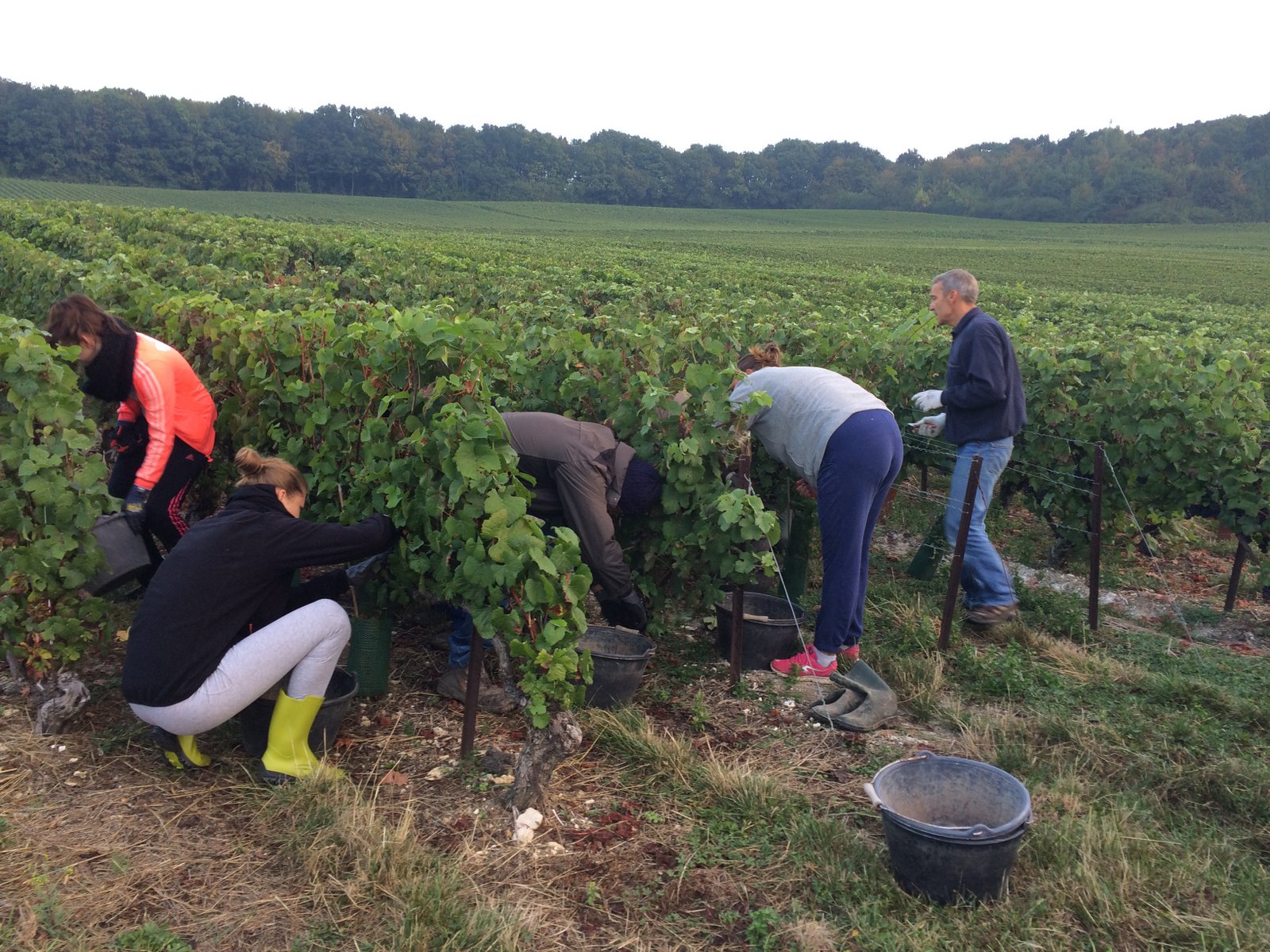
    Need we remind you? We still look out for these weeds.


    Return Sustainability main page or How to work the vines