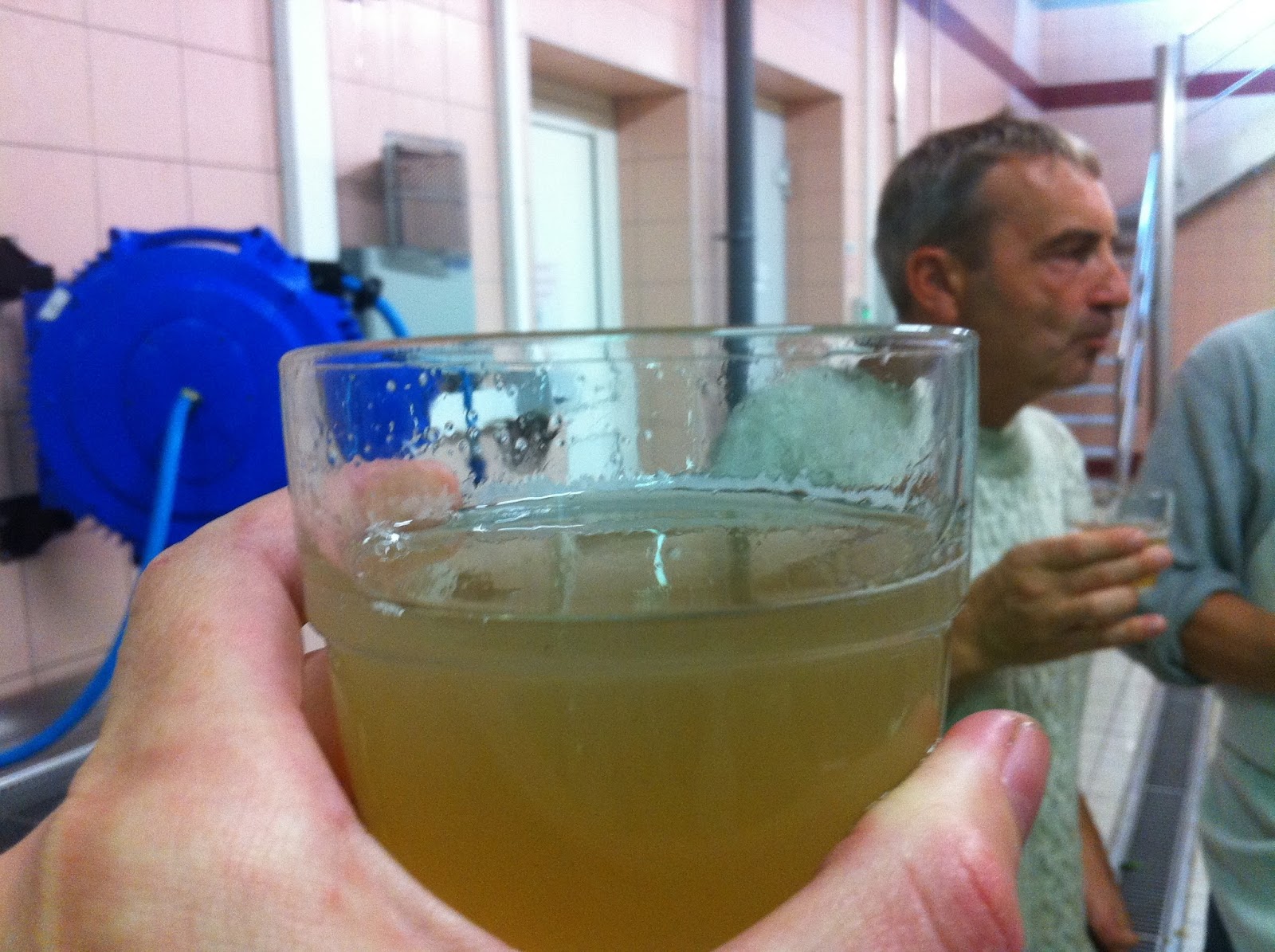
Viser opslag med etiketten Champagnes. Vis alle opslag

18. nov. 2016

Champagne: Our range


At Champagne Tange-Gerard we suggest the following range of champagnes:

Singles line..........Meet our single line champagnes

  • Classic line..........Meet our classic line champagnes
    Disgorgement dates


    Main page
  • 11. okt. 2016

    Champagne: The Tange-Gerard singles line

    Our singles line of champagnes reflects our terroir, our way of working, inventiveness and creativity.

    The basic idea is singularity. It may be a single cépage, a single plot, only "vieilles vignes" or something else. Always a single year.

    Our aim is to draw any possible benefit from our tiny and very human size of domain which enables us to oversee a maximum of details ourselves.

    The singles series come in very limited numbers. Maybe only once. Therefore, all bottles are manually numbered.

    The terroir
    Our terroir is particular at the corner of the Côte des Blancs south of Épernay.

    Here the chalky soils of Champagne (may) mix with layers of either clay or silt combined with organic material giving the vines harder times to develop and lowering yields naturally.

    Furthermore, the altitude of our plots at some 200 meters above sea level allows our soils a different expression than the lower part of Côte des Blancs.

    The plots whether in Soulieres or in Loisy-en-Brie are all orientated east-west to benefit as much as possible from the sun.

    The outdoor sustainability
    We have decided to apply our conviction in all aspects of our work. Thus we grow our vines in agreement with the rules of Sustainable Viticulture in Champagne. These contain a coherent set of environmentally respectful practises.

    Currently, we use a maximum of organic agricultural inputs (for instance fertilizers and occasionally minerals). However, we still reserve ourselves the possibility to use non natural fungicides when necessary to secure a minimum yield.

    Furthermore, we work the soils mechanically and manually with the use of small tools, that tend to impact the environment less than bigger ones.

    We don't use any kind of insecticide whatever in the season because we want to favour the presence and multiplication of a fauna symbiotic with our work as well as seeing a development or preservation of natural habitat zones.

    The grapes
    We grow the grapes for the singles series in our plots in Soulieres and in Loisy-en-Brie. The vines are rather old as these plots were planted between the early sixties and into the eighties.

    Of course, such old vines produce less grapes. However, smaller yields award us with grapes of more concentrated aromas that we want to work into correspondingly expressive wines.

    You will find both Chardonnays and Pinots in our soils though with a slight majority of the white grapes that have made the region famous and popular amongst wine lovers.

    The harvest
    In the days before the grape harvest we measure the sugar of the different varieties in each plot carefully. Our aim is to pick grapes that will provide a level of alcohol around 10,5 %/vol.

    Two samples combined with berry tasting enable us to decide for the start as well as the order of plots which will vary with the years. The decision must balance the possibility of better grapes with the risk of decline.

    The grapes are hand picked and pressedimmediately in Coquard horizontal presses at our cooperative in Vertus, less than 10 kilometers from the vineyards.

    The pressing is followed by a passage of up to 12 hours in small steel vats to allow solid stuff in the fresh must to sediment.

    The vinification
    The vinification takes place in 60 hl steel vats.

    Industrial yeast is added for the fermentation to ensure a smooth process. Healthy grapes are crucial.

    The first alcoholic fermentation is usually achieved in 10 to 14 days. The young wine remains unstable during the following months. It makes sense to taste it the following spring only.

    As we like our wines to age more than average, we avoid the malolactic fermentation. The sharp acidity of the young wine will diminish naturally with time thus preserving a more youthful taste than what would be the case with malo done.

    The champagnification
    The singles line champagnes are not blended with reserve wines from other years. Instead these champagnes represent their year of origin as well as their plot.

    The second alcoholic fermentation is performed with the same yeast mixed in some of the same wine and local sugar. The same sugar and wine will be used for the dosage later.

    The bottles spend at least three years on the lees in the cave, possibly some more time before and after the disgorging, thus they have some years of age already before leaving our premises.

    As the wine develops with time, the dosage must adapt to achieve what we believe to be the best taste. Therefore, different lots may be dosed differently. You will find the dosage as well as the time of the disgorging manually written on the back label.

    The packaging sustainability
    The labelling and packaging of the singles champagnes are in line with sustainability as a global approach.

    But since champagne is also a wine of celebration, we like it to look accordingly.

    The star of our village combined with a color on natural fiber-based paper and water-based ink assures continuation with the look of our classic line.

    Despite a rich tradition to present prestige champagnes with cutting edge packaging, we have decided to remain modest to keep our usage of materials low.

    Instead we care to number each bottle manually on the back label to state that the singles champagnes are rare wines, that are conceived in very limited quantities.

    The fun
    A glass of champagne instantly transforms the moment into something nicer.

    Our singles range is destined for occasions where you want the champagne to be a leading part for a moment spent with people you want to share the experience of this wine with.

    Take your time, taste the wine. Try again and allow yourself and your senses to follow the taste as it develops in your glass. The best way we know to allow a champagne to live and to live on is to experience it and share this with people we appreciate.

    This range of champagnes can be enjoyed on their own or with treats that allow the wine to stay the leading part.


    Champagne main page

    10. okt. 2016

    Champagne : the singles - Solliage

    Our cuvée Solliage is the first member of the singles range.

    As all first timers the work, the pride but also the anxiety follow along the steps of it leaving home to settle well somewhere out there in a cave with you.

    Solliage is pure 2013. This year was a late starter.

    The year in our vineyard
    Spring arrived late in Champagne in 2013. The winter never seemed to finish. In April our vines were three weeks behind their usual stage this time of the year. Later, the flowering in early July took place under the same hideously cold conditions. This caused phenomena like millerandage and coulure that would leave us with fewer and smaller Chardonnays than usual.

    Then a sudden change brought warm temperatures for the next two months with more sun than ever measured in 20 years and no rain. Thus, the pollination ended much better than it started. A bit of rain in September enabled the grapes to put on some weight very much needed. But the vines never caught up with the time lost in spring: Late buds, late flowers would inevitably mean late harvest.

    A grape harvest in October was last seen in the 1980s, and the family memories of such late grapes were not the best. Despire samples of excellent quality, we remained slightly sceptical until the 2nd of October, where we picked the first Chardonnays that we planned to elaborate into our own cuvée.

    These grapes were simply shiny: Yellowish due to their high level of maturity and in perfect health. The fears we had to find them in a state of deterioration because of possibly wetter weather in October turned out to be of no relevance : Like anything else this unusual year, the traditional moist of the month seemed delayed as well, likely saving the grapes from the fate of fungi.

    However, the logistical challenge to pick enough grapes to fill one press within our target time became possible also because of our dedicated team who made our target theirs.

    The vendange and the vinification
    8.000 kilos were pressed with stems and skin as is the tradition in Champagne. The result was a rich and quite heavy must with a sugar level of 10,85 %/vol., which corresponds to grapes being as close to ripe as we could possibly want.

    The Chardonnays of the cuvée originate from three different plots: A bit from the plots of Crochettes and Belles Feuilles in Soulières and more from the low part of the Chardonnays field called Vieilles Grand-mères in Loisy-en-Brie.

    A first impression of the young wine showed a certain fattiness (richness) caused by the ripeness of the grapes. Furthermore, an impressive amount of acidity with green fruits, lemon and more exotic tamarind confirmed our general impression of 2013 as a year of exotic fruits on the nose and palate in general. It was decided not to perform the malolactic fermentation (malo) to leave the wine as close to its primary properties as possible.

    As the young wine obtained a more stable state in spring 2014, it confirmed itself to be a straight forward wine that kicks off nicely with a strong attack, a pleasant and steady abundance that finishes off long, fresh and mineral. As we decided to stick with the natural development of the wine, consequently no reserve wines were added leaving this wine as pure 2013.

    The taste of Solliage
    Four years after bottling, the cuvée Solliage still contains a high level of acidity that we interpret as an expression of the year: Very cold, then very warm, then cooler and eventually perfect dry and cool conditions for the harvest. A year that took its time, a champagne that seems to follow the same trend.

    The mousse is very alive with many small and fine bubbles that are somewhat different to our other champagnes. 2013 was our first year dealing fully with all the vineyards, and we decided to have grass growing between the rows. The vines were forced to share water and minerals which showed in the must with less nitrogen and consequently a different pattern for the fermentations.

    On the nose, the cuvée Solliage is expressive. As for the taste, the fun is only at the starting block. Still very fresh, this champagne is dry with plenty of green fruit flavours and notes of sweetness as a clear reference to the ripe must it came from.

    In the mouth, first, the lemony acidity seems omnipresent, but then you may discover deeper layers with pears and hazelnuts and sweetness like what we call viennoiserie. The richness of the grapes of origin has now become fat, abundance in your glass. The long finish hits notes of lemon with minerality and again some sweetness.

    In the years to come, we expect the acidity to diminish to let other tasty experiences take over. Under the correct conditions you can keep this wine for several years.

    Please don't hesitate to stay in touch and ask about the development of the champagne.


    Champagne main page

    7. sep. 2015

    Tange-Gerard Calling Chardonnay-lovers

    Maybe you have followed our Blanc de Blancs as the vintages have changed from 2002 onwards? Maybe you have joined us along the journey? Or maybe you would like to try a specific vintage again? Now you may dig deeper into the taste of even more aged vintages.

    Throughout the years, we have been saving a few boxes of our Blanc de Blancs vintages to be able to follow their development as well as to build our own collection of older wines.

    Now is the first time we can invite you to join us in this journey with a vintage box of three different years of this 100% Chardonnay champagne. The bottles will enable you to taste examples of how time works on our Blanc de Blancs as well as the differences between the three years.


    2007 - An early year in Champagne
    This Blanc de Blancs was made with grapes from an early year with harvest in late August. Despite notes of age, this vintage still has acidity to develop a bit further if you store it correctly. However, it is an already perfectly enjoyable vintage Blanc de Blancs.

    2004 - A year of abundance in Champagne

    The 2004 Blanc de Blancs was made in a year with an abundance of grapes of excellent quality, as is this champagne with layers of age that provide a natural sweetness combined with deeper notes of nuts. You may enjoy it now or choose to keep it for another year under correct conditions.

    2002 - An exceptional year in Champagne
    15 years after, this Blanc de Blancs has evolved into a beautifully powerful vintage champagne. Fine and persistent bubbles with notes of toasted bread on the nose and cooked fruits (cherries) and nuts followed by notes from the forest and mushrooms on the palate. Powerful final and a sweetness that suggests the possibility of more to come in the cave. To fully enjoy this beautiful vintage, we advise to drink it within a year after purchase.


    We have not sold these vintages for several years. This is your chance to get hold of older Blanc de Blancs for a price of 130 euros/1.000 dkr per box. The number of boxes is very limited. Please send a mail for more information.


    The rest of our assortment features assembled champagnes Tradition and Noirs & Blancs, vintages Blanc de Blancs (vintage 2011/12) and Selection (vintage 2007) and rosés Rosé d'Assemblage and Rosé de Saignée. From early December we will sell our first Singles Line champagne.


    Bubbly regards,
    Alain Gérard and Solveig Tange, Soulieres, November 29th 2017

    17. okt. 2012

    Champagne: Noirs & Blancs turns the tradition upside-down

    With the Noirs & Blancs champagne we turn our own tradition upside down. Blending is a tradition and a long time art in Champagne. White base wines of different plots, vines and vintages are mixed and fermented in bottles followed by a slow maturation in cool caves. The Methode Champenoise.

    The Chardonnay grapes are usually upfront in our cuvées. Well, not this time. In the Noirs & Blancs for a change we have allowed the Pinot Noir and Pinot Meunier-grapes into the leading part at the expense of the Chardonnays. This champagne clearly demonstrates the difference of Pinot- and Chardonnay-grapes. It is round and fruity rather than upright and more straightforward acid.

    No reserve, one vintage
    Older reserve wines are often used in Champagne to contribute to the backbone of a non-vintage champagne. Not the Noirs & Blancs. It is made with pure 2009-wines and is thus technically a vintage champagne.

    However, we do not present it as such, since this champagne is meant to drink, not to keep.

    2009 : Good and average
    We remember the year of 2009 as average.

    It gave us nice quality wines to build different champagnes. It spared us from serious trouble.

    Nothing special. Buds burst mid-April, flowers mid-June gave us a grapeharvest mid-September, which is all very average.

    Wines with a good level of sugar and acidity provided us with quality champagnes with some years ahead of them though probably not vintages to keep for decades.

    This champagne contains both black and white grapes which is reflected in its name as well as on the labels.

    The Noirs & Blancs has been bottled quite a few years ago thus having reached a pretty unusual age for a non vintage champagne. It is anything but a spring chicken,which you may easily spot on the nose as well as the palate.

    Nose and palate
    On your nose you may find different fruits such as apple and pear and a hint of hazelnut, that reveals the age of the wine.

    On your palate the white fruits are followed by yellow fruits with a heart of stone like apricot and peach. However, none of the three grape varieties leave a distinct mark. In the blend of this champagne cooperation counts more than individual performances. Thus the initial sensation of acidity is followed by more body, a taste rich on fruits and a very slight sensation of dryness on you palate due to the tannins of the Pinot grapes.

    The champagne has a dosage of 8,5 grams of sugar per litre.

    An all-round welcome
    Noirs & Blancs is a champagne, that is perfect to welcome your guests, many or few. With its fruity nose and taste it is easy to drink for most of us, even those who may find champagne often a bit too acid.

    You may enjoy the Noirs & Blancs on its own or with tapas of different kinds. Fish, white meat or cheese as long as the taste stays mild.

    It also works wonderfully with cheese, for instance a well matured Brie de Meaux.


    Champagne main page


    4. aug. 2010

    Champagne: The classic Tange-Gerard line

    Our classic line of champagnes is made in cooperation with the oenologue at our cooperative (coop) and a small group of growers who work together.

    The idea of this line of champagnes is to elaborate champagnes that are typical of our micro-region around Vertus. The common characteristics of these wines originates in a dominance of the Chardonnay which is here typically fresh and straight where flavours are harmonious in a fine and elegant way.

    This is a shared idea of taste between the different champagnes of the line, even for those containing little or no Chardonnay.

    The grapes
    The grapes are grown in the villages of Vertus, Bergères-les-Vertus, Oger, Soulières and Loisy-en-Brie.

    Our contribution is situated in Soulieres and Loisy-en-Brie with a bit more than half of Chardonnay and a bit less of both Pinots whereas Vertus is mainly Chardonnay.

    The harvest
    All grapes are pressed in Coquard horizontal presses at the coop in Vertus, less then 10 kilometers from the vineyards.

    The pressing is followed by a passage of up to 12 hours in ceramic tanks that allow solid stuff in the fresh must to sediment.

    Pinot grapes for red wine and for the Rosé de Saignée are further sorted and the berries are separated from the stems.

    The vinification
    The must is transferred to steel vats of different sizes that vary from 30 hl to 100 hl.

    Industrial yeast is used for the fermentation in addition to natural ones in order to ensure a smooth procesS. The temperature and sugar levels are indicators of the fermentation and these are measured every day to act, should the fermentation weaken. This may happen when the condition of the grapes is not good (health or temperature) or when maturity isn't accurate. Thus the great importance to grow good grapes, harvested at the right time.

    The first alcoholic fermentation is usually finished after 14 days. The new wine remains unstable the following months which means its taste will change.

    Wines destined for non-vintage champagne go through the malolactic (malo) fermentation that changes some of the sharp acids into smoother ones. This procesS begins naturally when the temperature in the vat is above 15°C. Future vintage champagne wines do not go through the malo procedure as they are expected to have a longer life thus more time for the acidity to fade naturally.

    The champagnification
    The tastings of the new wines begin in January and continues until March. A small group of winegrowers, the cellar master and the enologist of the coop will taste together throughout the period.

    This is where the wines destined for the different cuvées will be selected followed by the blending.

    About 90% of the still wines will be sold to champagne houses and bigger cooperatives from the autumn and until spring.

    Once agreement is reached within the group on each champagne, the bottling will be performed, typically in April, and the bottles will be stored in the caves for several years.

    Before the disgorging, the dosage of the champagnes will be discussed. The current tendency is lower dosage year by year. However the target is a pleasant taste and not necessarily a low dosage.

    The fun
    A glass of champagne instantly transforms the moment into something nicer.

    Whether you've got hold of a vintage or a brut sans année, a white champagne or a pink, a dry one or a sweeter demi-sec, a glass of champagne is a way, you may choose to appreciate a moment in your life differently.

    This range of champagnes suggests a bit of everything: You may find your reception wine or a bottle that fits a dish, you particularly like. You may also want a glass with someone special before dinner during weekends.

    The worst wrongdoing when it comes to champagne, is to limit possibilities to special events only.


    Champagne main page

    28. sep. 2009

    Champagne: Selection makes the world your oyster

    Selection is the absolute top of our classic range of champagne.

    A champagne that represents the most sophistiquated quality this region has to offer : An old vintage champagne made with selected grapes, in this case 100 % Chardonnay.

    Selection of grapes
    We choose these white grapes with greatest care. Only from the very best plots amongst our group of growers and only in years where the important balance between acidity and sugar is simply perfect.

    This provides an extraordinary high quality of grapes, a crucial basis to achieve the wanted level of quality. Still wines that hold promising scents and tastes from their very beginning. Where all extraordinary champagnes start.

    Further a vinification with utmost care and the extreme importance of age.

    No vintage champagne can be younger than three years : with its nine years in the bottle so far, Selection is already way beyond.

    Work of time
    Still wines of Champagne are usually rather acid.

    The Selection still wines are no exception, but they will spend so many years in the cave that this surplus acidity will diminish naturally. We take our time to see this jewel of our classic gem develop its full potential.

    The malolactic fermentation that is often used to remove some acidity is blocked to help the still wines keep their juvenile beaty.

    The years in the caves let Selection transform into this rich type of champagne. A true reward of scents and tastes of fruits that are fully preserved.

    Chardonnay on the nose
    This is a Blanc de Blancs that provides you the full range of the wonders of Chardonnay-grapes.

    A fine nose with scents of yellow fruits like abricots and Mirabelle-plums as well as a sweetness that in French is referred to as Pâte de Fruit. Along with the sugar you discover a sensation of grill or toast - Torréfaction - a sensation that truly reveals a well-matured champagne since it develops only with time as the wine ages in the caves.

    The palate
    As you continue to sip the wine, turn it around in your mouth before you finally swallow. You will experience a surprisingly powerful and yet delicate wine. Fruity and buttery and with the sweet sensation of pastries returning to your palate.

    A pleasant mineral sensation will round off with a freshness that occupy your mouth for quite a while before it finishes off this dome of different scents and tastes with an elegant finish of lemon.

    Selection is dosed very low with just 6 grams of sugar per litre of wine.

    Elegant match with food
    Selection is a wonderful partner whether for a starter or a main course that may be confit de canard as well as scallops, dishes with fish, poultry or even game. It can match a wide range of both quite tasty as well as more refined dishes.

    It works very nicely with certain cheeses like for instance Mont d'Or.

    Or just on its very own.

    Long storage
    You will not taste Selection before it has spend at least five years in its amber-coloured bottle with pretty engraved grapes.

    With the right cellar you may want to keep the current vintage of 2007 for another five-ten years to get even more of an already special wine.


    Champagne main page

    Champagne:The grand tradition of Champagne is to blend

    Our Tradition is a champagne, that represents a long time art in Champagne: The tradition of blending. White base wines of different plots, grape varieties and vintages are carefully mixed after a series of tastings and discussions of the different blends. The chosen one will be transferred to the final bottle to go through its second alcoholic fermentaton followed by a slow maturation in cool caves. This is The Methode Champenoise.

    Chardonnay first, Pinots next
    The blend reflects the tradition and terroir of the growers.

    Our group of growers is based in the village of Vertus in the Côte des Blancs, where Chardonnay is king. The blend thus contains at least 90% white Chardonnay-grapes and up to 10% red Pinot Noir and Pinot Meunier. However the exact proportions between Chardonnay and Pinots may vary slightly with the years.

    Up to 10% of the Chardonnay wines will be older reserve wines, that are added to the blend to preserve the same style of taste year after year.

    We like our champagnes mature, and we usually sell our Tradition when it is around five years old.

    Our current Tradition is made with base wines from mainly 2011. It combines the freshness and elegance of the Chardonnay-grape with some body and structure brought by the Pinot grapes.

    Notes of some age
    Due to age, more complex aromas have partly replaced the fresh fruits of a younger champagne.

    You may find notes of yellow fruits like apricot, Mirabelle plum and peach as well as volatile scents of fine flowers on the nose.

    A distinct taste of age that some describe as mushrooms and others as soil or forest takes over before a pleasant yet fresh finale will stay in your mouth for a while.

    Dosage
    A bit of sugar dissolved in some reserve wine is used as dosage to top up the bottle after an inevitable loss of a few centilitres of champagne at the disgorging, that follows after the many months of maturation in the caves.

    With just 9,5 grams of sugar per litre of wine our dosage is rather low for a brut.

    Tradition will fit your aperitif amongst friends perfectly as well as serve as an icebreaker at a bigger party. It will accompany your meals with white fish or seafood as well.

    Demi-sec version
    The Tradition exists in a Demi-Sec version too.

    The dosage is currently 32 grams of sugar per litre.

    This slightly sweetened champagne will fit your dishes with foie gras and desserts as long as they are not too sweet.


    Champagne main page

    27. sep. 2009

    Champagne: Blanc de Blancs Invites your inner angel out to sing

    When perfectly ripe for champagne, the skin of the Chardonnay-grape is neatly decorated with little black dots. It develops a yellowish colour that remains influenced by the acid green of summertime.

    This is why our Blanc de Blancs champagne – made entirely of Chardonnay-grapes – is labelled like this.

    We wanted it to look like the mature grape, that has made the Côte de Blancs one of the famous regions of Champagne.

    Excellent Chardonnays
    Our Blanc de Blancs champagne is no exception to the rule of excellence of Chardonnay-grapes from this area.

    The grapes are still acid when we pick them up at the grape harvest. The still wines are no exception. But we’ve got time to wait.

    The second alcoholic fermentation in the bottle followed by the wonders of the caves - time basically - is what the Methode Champenoise is all about.

    Good champagne is a slow starter. And even slower when a born millésime like this Blanc de Blancs from 2011.

    Personality for a vintage
    A vintage champagne like this holds such a distinctive personality of its own that makes you keep it away from the traditional mixing with older years to achieve a great result. The wines made from the various Chardonnay plots are already superior on their own.

    2011 was one of these early years in Champagne: the leaves followed by flowers came early due to unusually warm and dry conditions. Cooler and wet weather in the first part of summer was followed by warmer conditions in August. However late rain just before the early start of the harvest made it necessary to do a good job when sorting rotten grapes from healthy ones directly on the plant. The Chardonnays have come out very well with a nice balance between sugar and acidity despite these very complicated conditions.

    Acidity meets sweetness
    When you sip, you may even notice a certain sweetness as you let the wine fill your mouth. Some would liken this sensation with sweets, the French refer to it as Confiserie. It is a sweetness that relates to the long aging of the champagne. Yet there is more to come.

    This Blanc de Blancs is certainly still upright and tight.

    It is a wine that will develop further during some years with the correct conditions. But already now you can discover this great wine.

    Dosage
    The dosage – a bit of sugar dissolved in some base wine and used to top up the bottle at disgorging time - is as low as 5 grams of sugar per litre which leaves it below the range of a brut that ranges from 7 to 15, technically an extra-brut.

    Let Blanc de Blancs begin your gathering nicely
    The Blanc de Blancs 2011 is a very good choice for an aperitif.

    For occasions where you plan to take your time to taste and share the sensations of a great wine with family, friends or workmates.

    Nothing puts more value to the special moments of your life than wines with carefully chosen dishes or snacks to match.

    This Blanc de Blancs 2011 will even accompany your party nicely at the table and reveal itself as an excellent match for your dishes of seafood or breaded, white fish, fried in butter.


    Champagne main page

    25. sep. 2009

    Champagne: Invite a Saignée at the table

    Pink is a long-time Champagne tradition.

    When you make it the Saignée way however you give your rosé a twist at the same time. A champagne made in the purest tradition and yet both rethought and then remade.

    Like producers of champagne through centuries have continued to reinvent their product in new ways.

    Colour by maceration
    Forget about blending to achieve a certain colour: This rosé champagne bleeds to receive its disturbingly deep pink nuance.

    In French saigner simply means to bleed.

    The best of the Pinot Noir grapes, sortet and destemmed, is placed in a vat where the skin of these red grapes will be allowed to macerate for up to 36 hours. As long as necessary for this otherwise white and maiden must to redden and blush into the more dramatic colour of the Saignée.

    The fermentation
    Only the wine that runs naturally when grapes on top of other grapes press these naturally – the Vin de Goutte - will later ferment as any other red wine.

    This first fermentation takes place in the steel vats and the second one will occur in the bottles where the wine develops into the final Rosé de Saignée champagne of a colour that is clearly visible and easy to appreciate in its transparent bottle. Kept simple since less is usually more. Though not when it comes to taste.

    100% Pinot Noir
    The Saignée is a pure 100% Pinot Noir Champagne.

    It manifests a powerful nose that begins with raspberries, cherries and blackcurrant, continues into fruits like apricot and peach to end up with spicy hints of cloves and cinnamon.

    The small berries reappear on your palate where they are joined by redcurrant, strawberries and even a bit of pebber.

    Lively bubbles
    Despite a few years already spent in its bottle, the Rosé de Saignée remains a youthful champagne with plenty of lively bubbles.

    As the champagne is poured, a handsome circle of white bubbles on top of the delicate pink colour of the wine itself will be formed along the glass.

    Red bubbly
    The red and black fruits are the strength and the power of Pinot. This is no light drink for your appetizer. Meet a champagne that will match several meats from veal, lamb and well into different dishes of duck or even game.

    You may also want to discover our Rosé de Saignée as a cheerful companion with red fruits desserts or grapefruit sorbets or just powerfully on its own.

    The dosage is 5 grammes of sugar per litre of wine.


    Champagne main page

    Champagne: Valentine’s Day is no limit: Think Pink all year

    Pink champagne is all about colour at first.

    Many eyes are attracted by the delicate raspberry-robed wine which is why we keep it in a transparent bottle with a matching red label.

    Next comes taste.

    Rosé : A champagne of whites with a red touch
    Our Rosé d’Assemblage is as dry as its white cousin, but it has different flavours that it owes to the special blend.

    The Assemblage is a mix of 90% Chardonnay and 10% Pinot Noir-grapes.

    In fact it is based on the same blend as our Tradition champagne.

    When carefully mixed with 10% local red wine, made from the Pinot Noir, the aromas on your nose and palate change. The sensations of pink are red.

    Red fruits party
    You may recognise fruits like cherries and strawberries as you smell the Rosé d’Assemblage. They even reappear as you taste it along with blackberries and even peppers.

    The fleshy taste of this rosé pleasantly stays in your mouth for a while.

    Our current Rosé d’Assemblage is a non vintage of some age suggesting a lively wine with myriads of fine bubbles that will form into a regular necklace of bubbles along the side of your glass before they burst on the surface.

    Special blend of Champagne
    Blending white base wines with local red wine is a genuine as well as ancient speciality of Champagne.

    As early as the 18th century, this attractive type of champagne was appreciated around Europe. Today it still is. It remains the only high quality wine in France where the AOC-rules allows a blend of white and red wines.

    This blending takes place in the year after the grape harvest at the time of bottling (tirage). The fermentation in the bottle is followed by a slow maturation in a cool local cave that will enhance the flavours and tastes of this champagne, that is dosed with just 8 grams of sugar per litre of wine.

    Multipurpose champagne
    Pink champagnes like our Rosé d’Assemblage have grown more and more popular during the last 20 years. Due to the attractive colour but also to the all-round usage potential of this pretty wine.

    It will fit your aperitif amongst friends or at a bigger party as well as a big range of meals from lobster, lumpfish caviar to white meat dishes and our local Chaource cheese.

    In Japan pink champagne is an appreciated match for sushi as well.


    Champagne main page
    1. apr. 2008

    Champagnes: Disgorgement-dates


    Please note that you since autumn 2012 also will find this date printed on the bottle.

    The Tange-Gerard Singles line:
    Cuvée Solliage brut:
    - Lot: 13-07-17-8: Disgorged in July 2017


    OThe Tange-Gerard Classic line:
    Tradition brut:
    - Lot: 12-6-16-1 : Disgorged in June 2016
    - Lot: 11-03-16-1: Disgorged on July 11th 2016
    - Lot: 08-11-12- : Disgorged on November 9th 2012
    - Lot: 07-01-11-1: Disgorged on October 26th 2011
    - Lot: 06-07-11-1: Disgorged on July 26th 2011
    - Lot: 06-01-01: Disgorged on January 19th 2011
    - Lot: 04-10-01: Disgorged on October 21st 2009
    - Lot: 04-06-01: Disgorged on June 24th 2010

    Tradition Demi-sec:
    - Lot: 12-01-17-3: Disgorged in January 2017
    - Lot: 11-6-14-3 : Disgorged in June 2014
    - Lot: 09-10-12-2: Disgorged on October 27th 2012
    - Lot: 09-04-12-3: Disgorged on April 7th 2012
    - Lot: 00-00-00-0: Disgorged on October 24th 2011
    - Lot: 08-07-11-3: Disgorged on July 27st 2011
    - Lot: 04-10-03: Disgorged on October 19th 2009

    Noirs & Blancs brut:
    - Lot: 09-06-16-9: Disgorged in June 2016
    - Lot: 07-10-09 : Disgorged in October 19th 2009

    Blanc de Blancs brut:
    - 2011: Lot: 11-10-16-8: Disgorged in October 2016
    - 2008: Lot: 08-06-14-8: Disgorged in June 2014
    - 2006: Lot: 06-02-12-8: Disgorged on July 25th 2012
    - 2005: Lot: 04-01-8 : Disgorged on January 20th 2011
    - 2005: Lot: 04-11-08 : Disgorged on November 8th 2010
    - 2002: Lot: 2-10-08 : Disgorged

    Selection brut:
    - 2007: Lot: 07-01-17-6: Disgorged in January 2017
    - 2006: Lot: 06-06-16-6: Disgorged in June 2016
    - 2005: Lot: 05-07-12- : Disgorged July 23rd 2012
    - 2004: Lot: 04-04-11-6: Disgorged on April 26th 2011
    - 2002: Lot: 02-06-0 : Disgorged on June 15th 2009

    Rosé d'Assemblage brut:
    - Lot: 11-01-17-3: Disgorged in January 2016
    - Lot: 10-06-14-4: Disgorged in June 2014
    - Lot: 07-07-12- : Disgorged on July 24th 2012
    - Lot: 07-02-12-4: Disgorged on February 13th 2012
    - Lot: 07-01-04 : Disgorged on January 18th 2011
    - Lot: 06-01-04 : Disgorged on October 29th 2010

    Rosé de Saignee brut:
    - Lot: 09-01-17-7: Disgorged in January 2017
    - Lot: 09-6-15-7 : Disgorged in June 2015
    - Lot: 07-10-12- : Disgorged on October 23rd 2012
    - Lot: 07-10-11-7: Disgorged on October 25th 2011
    - Lot: 06-12-7 : Disgorged on December 10th 2010

    NB: Disgorging is the process where the deposit of yeast is removed and the dosage - sugar dissolved in a bit of wine - added.


    Champagne main page

    8. jan. 2002

    Solliage - facts only


    Cuvée..........: Solliage

    Number........: All bottles are individually numbered. The total number is 3000.

    Grapes.........: 100% Chardonnay, thus technically a Blanc de Blancs

    Vineyard.......: Vieilles Grand-mères, Belles Feuilles, Crochettes

    Planted.........: 1988, 1968, 1965

    Communes....: Loisy-en-Brie, Soulières

    Vintage.........: 2013

    Pressed.........: October 3rd, 2013

    Vinification.....: Steel vats, no malolactic fermentation

    Tirage............: 14th of April 2014

    Disgorging......: 1st disgorging : July 7th, 2017

    Dosage..........: 1st lot : 6 g per liter

    Taste.............: Fresh nose, fresh palate of white and exotic fruits, hazelnuts and some notes of sweetness
    ..................... from pastries, mineral finish

    Usage............: Enjoy Cuvée Solliage when you want to cozy up wih treats that allows the champagne the
    ..................... lead role of taste

    Further ageing: Several years in a cave with the correct conditions
    ..................... (dark, constant temperature around 10-12 degrees Celsius)

    Label design...: The star from Soulières in an updated version,
    ...................... A yellow stripe as this is a Blanc de Blancs (100% Chardonnay),
    ...................... A white label to keep the choices simple,

    Name............: Your name is who you are. The name of Solliage is our invention. It's a game of words.
    ..................... We combined syllables of names of the communes, plots and certain characteristics of this
    ..................... champagne.

    1. nov. 2000

    Champagne : Noirs & Blancs bouleverse la tradition

    Nous vous l’accordons : aux premiers abords, notre cuvée Noirs & Blancs n’est qu’un assemblage des trois grands cépages de la Champagne. Noirs & Blancs pourtant se distingue de nos cuvées qui d’ordinaire font la part belle aux Chardonnays, notre situation à quelques kilomètres seulement de Vertus et des Chardonnays les plus racés oblige.

    Le rôle principal est rarement tenu par les Pinots. Autre distinction : nous ne suivons pas la tradition séculaire qui en Champagne est d'assembler les vins de plusieurs années.

    Un millésime
    Noirs & Blancs est le vin des raisins de l'année.

    Ce Champagne va ainsi à l’encontre des traditions. Avec son délicat mélange de deux tiers de Noirs – Meunier et Pinot – et un tiers de Blancs issus de la même année, c’est techniquement parlant un millésime.

    2009 : Une bonne année
    Nous nous souvenons de 2009 comme une bonne année.

    Avec les raisins de l'année, nous nous retrouvions avec des bons vins clairs de qualité qui formèrent la base de l'assemblage des différents champagnes. Dans l'année, nous avons été épargné de pas mal des complications que nous rencontrons fréquemment dans notre travail dans les vignes.

    Ni tôt ni tard, les premières feuilles sortirent mi-avril suivi par les fleurs mi-juin et finalement les vendanges mi-septembre.

    Les vins de l'anneée contenaient un niveau de sucre et d'acidité suffisants pour créer des champagnes de qualité avec quelques années devant eux, même si ce ne sont peut-être pas des vins à garder pendant des décennies.

    Ce sont ces raisins noirs et blancs que vous retrouvez dans le Champagne qui porte ce nom. Sur les étiquettes également. Cela fait déjà plus de sept ans que Noirs & Blancs est dans sa bouteille. Un bel âge pour un Champagne, qui se révèle au nez et au palais.

    Le nez et le palais
    La première sensation d'acidité est suivie par la rondeur, un goût très fruité, et une finale sèche et discrète, portée par les tanins des Pinots.

    Au nez, vous retrouverez des arômes de fruits blancs, pomme et poire principalement, ainsi peut-être qu’une note de noisette, révélatrice de l'âge du vin.

    En bouche, les fruits blancs font place aux fruits jaunes, pêche et abricot. Ni les Pinots ni les Chardonnays ne s’imposent.

    Noirs & Blancs est un assemblage où coopération compte plus que prestations individuelles.

    Peu sucré pour un brut, sa teneur est de 8,5 grammes par litre.

    Bienvenue au tous les palais
    Ce Champagne sera le meilleur ami de vos apéritifs.

    Facile à apprécier pour tous ceux qui reprochent à certains Champagnes leur excès d’acidité, Noirs & Blancs se prête aux mises en bouche de saveurs variées : rillettes de volailles ou de poisson, charcuteries, Brie de Meaux, pourvu qu'il ne soit pas trop corsé.

    25. okt. 2000

    Champagne : Le Blanc de Blancs invite votre ange interieure à chanter

    Lorsque le Chardonnay est parfaitement mûr sa peau est parsemée de petits points noirs. Il développe une couleur tirant sur le jaune nuancé par les réminiscences de la verte acidité de l'été.

    C'est pour cette raison que le Champagne Blanc de Blancs - issu uniquement de cépages Chardonnay - est ainsi présenté.

    Nous voulions qu'il ressemble à cette grappe de raisin mûre à l'origine de la célèbre Côte des Blancs en Champagne.

    Des Chardonnays excellents
    Notre Champagne Blanc de Blancs ne fait pas exception à la règle d'excellence du raisin Chardonnay de cette région.

    Le raisin est encore acide quand nous le cueillons lors des vendanges. Les vins clairs n'y font pas exception. Mais nous prenons notre temps.

    Une seconde fermentation alcoolique est suivie du prodige des caves - essentiellement avec du temps en plus : ce sont les trois éléments qui constituent la Méthode Champenoise.

    Un bon Champagne s'élabore lentement. Et encore plus lentement lorsqu'il agit d'un Champagne millésimé comme ce Blanc de Blancs 2011.

    La personnalité d'un millésime
    Un millésime en Champagne comme celui-ci possède une personnalité affirmée qui l'éloigne de l'assemblage traditionnel ayant recours à des vins plus âgés en vue d'obtenir un résultat excellent. Les vins issus des parcelles de Chardonnay sont d'une qualité intrinsèquement supérieure.

    2011 était encore une année précoce en Champagne : les feuilles suivies par les fleurs sont sorties quelques semaines plus tôt que d'habitude à cause des conditions exceptionnellement chaudes et sèches. Le début de l'été fut plus frais et humide avec des températures plus chaudes en août. Pourtant, de la pluie juste avant les vendanges a demandé un tri radical pour ne garder que les grappes saines. Depuis, les Chardonnays ont montré leurs grandes qualités et un bel équilibre entre le sucre et l'acidité malgré ces conditions bien compliquées.

    L'acidité et la douceur
    Lorsque vous en savourez une petite gorgée, vous pouvez même y noter une certaine douceur lorsque le vin s'épanouit en bouche ; certains la comparent à la confiserie. C'est une douceur liée au long processus de vieillissement du Champagne. Mais ce dernier peut encore offrir davantage avec le temps.

    Ce Blanc de Blancs reste droit et tendu.

    Un vin qui va évoluer encore pendant quelques années avec de bonnes conditions.

    Mais que dès à présent vous pouvez découvrir et apprécier.

    Le dosage
    Le dosage - un peu de sucre dissous dans du vin et rajouté au moment du dégorgement - n'est que de 5 grammes de sucre par litre, ce qui le classe sous les bruts (dosage entre 7 et 15 grammes), c’est donc techniquement un extra-brut.

    Parfait pour vos apéritifs
    Le Blanc de Blancs 2011 se prête excellemment à une dégustation lors d'un apéritif, lorsque vous désirez prendre le temps de goûter et partager les sensations d'un grand vin avec votre famille, des amis ou des collègues de travail.

    Rien n'ajoute plus de valeur aux moments particuliers de votre vie que des vins accompagnant des plats soigneusement choisis.

    Ce Blanc de Blancs 2011 accompagnera également vos repas de fête, s'accordant parfaitement aux plats de fruits de mer et de poissons à chair blanche cuits au beurre.


    16. okt. 2000

    Champagne : Invitez un Saignée à table

    Le Rosé est une longue tradition en Champagne mais quand nous l'élaborons selon la méthode de la Saignée, nous tordons malgré tout le cou à l'histoire.

    Tout en étant un Champagne issu de la plus pure tradition, le Rosé de Saignée réinvente l'idée d'un rosé.

    Comme tous les Champagnes et leurs élaborateurs à travers les siècles ont toujours suivi et évolué dans l'air du temps.

    La couleur par la macération
    Ici, pas de question de mélange de vins. Ce Champagne saigne pour obtenir sa sombre et profonde couleur aux nuances rosées.

    Le meilleur du Pinot Noir, trié et égrappé, est placé dans une cuve où la peau des raisins rouges restera à macérer jusqu'à 36 heures. Aussi longtemps que nécessaire pour que ce clair et pur moût rosisse et atteigne la dramatique couleur de la Saignée.

    The best of the Pinot Noir grapes, sortet and destemmed, is placed in a vat where the skin of these red grapes will be allowed to macerate for up to 36 hours. As long as necessary for this otherwise white and maiden must to redden and blush into the more dramatic colour of the Saignée.

    La fermentation
    Seul le vin issu de la presse naturelle qu'exerce les grappes du haut sur celles d'en bas - le vin de Goutte - donnera en fermentant un vin rosé.

    La première fermentation a lieu dans des cuves d’acier ; la seconde en bouteille, dans lesquelles le vin se transforme peu à peu en Champagne Rosé de Saignée. Sa couleur est clairement visible et facilement appréciable puisque sa bouteille est transparente. En toute sobriété, comme souvent less is more.

    Mais pas quand il s'agit de goût !

    100% Pinot Noir
    Le Saignée est un Champagne 100% Pinot Noir.

    Il est puissant en bouche et au nez. Le nez est plein de fruits rouges : Framboise, cerise et cassis, suivi par des fruits jaunes comme l'abricot et la pêche puis une finale épicée sur la cannelle et le clou de girofle.

    Les petits fruits se retrouvent en bouche avec encore des groseilles, des fraises et même une note poivrée.

    Des bulles pétillantes
    Malgré quelques années dans sa bouteille déjà, le Rosé de Saignée reste un Champagne frais avec des bulles pétillantes et puissantes.

    Lorsque vous le versez, un joli cercle de bulles blanches se forme sur la paroi du verre, enveloppant la profonde couleur rosée du vin.

    Champagne rouge
    Les fruits noirs et rouges sont caractéristiques de la force du Pinot Noir. Ce n'est pas un vin léger qui est seulement là pour accompagner vos amuse-bouche. Rencontrez un Champagne qui s'associera à différentes viandes, tel le veau où l'agneau, ainsi qu'a des plats à base de canard ou même de gibier.

    Vous pouvez également considérer notre Rosé de Saignée comme le joyeux compagnon des desserts de fruits rouges ou des sorbets à base de pamplemousse ou pourquoi ne pas pour se faire plaisir avec un Champagne seul, puissant et différent des autres.

    Le dosage est de 5 grammes de sucre par litre.


    19. sep. 2000

    Champagne : La tradition en Champagne: Assembler

    Notre Tradition est un Champagne qui incarne un art bien ancien en Champagne: l'assemblage. Les vins clairs blancs provenant de divers cépages, parcelles et millésimes sont assemblés suivant une série de dégistations et de discussions sur des différents assemblages possibles; puis l'assemblage préféré est tiré et transféré dans sa bouteille finale dans laquelle se passe la deuxième fermentation alcoolique ; puis commence le lent processus de maturation dans des caves fraiches : C'est la Méthode Champenoise.

    D'abord les Chardonnays puis les Pinots
    L'assemblage reflète la tradition et le terroir de chez nous.

    Notre groupe de producteurs est situé dans le village de Vertus sur la Côte des Blancs où le cépage Chardonnay est roi. Notre assemblage, par conséquent, contient 90% Chardonnay et 10% Pinot Noir et Pinot Meunier.

    Environ 10% du vin de Chardonnay provient de vins anciens (de réserve) ajoutés au mélange afin de préserver un goût unique au fil des années. Pour cette raison, les pourcentages exacts dans l'assemblage peuvent varier légèrement d'une année sur l'autre.

    Nous apprécions notre Champagne lorsqu'il gagne en maturité et nous ne vendons pas notre Tradition avant qu'il ait au moins cinq ans.

    Actuellement le Tradition provient des vins de 2012 : la réunion entre la fraîcheur et l'élégance du Chardonnay en combinaison avec le corps et la structure des Pinots.

    Des notes d'un certain âge

    En raison du vieillissement, des arômes plus complexes remplacent avec le temps les fraiches saveurs fruitées d'un Champagne plus jeune.

    On peut y découvrir en attaque des notes de fruits jaunes, tels l'abricot, la mirabelle et la pêche ainsi que de subtiles et éphémères fragrances fleuries.

    Un arôme particulier dû à l'âge qui évoque pour certains les champignons et pour d'autres la terre où la forêt vient ensuite avant une agréable note pleine de fraîcheur qui restera longuement en bouche.

    Dosage
    Après de longs mois de maturation dans les caves, le dépôt de matière est rassemblé dans le col de la bouteille et expulsé lors du dégorgement.

    Les quelques centilitres perdus sont remplacés par un mélange de vin de réserve et de sucre dissous configurant le dosage du Champagne. Avec seulement 6 grammes de sucre par litre de vin, notre dosage est plutôt faible pour un brut.

    Cette cuvée fera merveille lors d'un apéritif entre amis et favorisera une ambiance chaleureuse lors d'une grande soirée. Il accompagnera également vos plats de fruits de mer, poissons blancs où même caviar.

    Version Demi-sec

    Notre Tradition existe également en demi-sec, avec un dosage de 32 grammes de sucre par litre de vin.

    Ce Champagne plus doux accompagnera délicatement vos plats de foie gras et vos desserts comme la Crème Brûlée où les gâteaux de noix, noisettes et amandes s'ils ne sont pas trop sucrés.